
What Is a Cleat Tool and Why Every Ductie Needs One

By Ductlink • 25 Jun 2026

If you install ductwork for a living, you already know how repetitive cleat installation can be.
One connection might not feel like much. But after fitting cleats across dozens of duct sections, floor after floor, the time and strain start to add up. Your hands slow down, your wrists feel it, and what should be a simple task starts cutting into the productivity of the whole crew.
That is exactly where a cleat tool earns its place in your kit.
A cleat tool is designed to help ductwork installers fit and secure cleats faster, more consistently and with less physical effort than doing the job by hand.
For Ducties working on commercial sites, it is not just a convenience. It is a tool that can save time on every connection.
What Is a Cleat Tool?
A cleat tool is a purpose-built hand tool used during sheet metal duct installation to tighten, fold or secure cleats around duct joints.
Cleats are commonly used to connect rectangular duct sections, particularly on systems such as Pittsburgh Lock and other flange-style duct connections.
The tool gives the installer better leverage and control, helping form a tighter and more consistent connection without relying only on hand pressure.
Unlike general-purpose pliers or improvised site tools, a proper cleat tool is designed specifically for the repetitive demands of duct installation.
ABOUT DUCTLINK
We build tools and site solutions designed specially for ductwork installers.
High-quality tools and storage solutions for Australian ductwork installers.
NEXT READS

Introducing Ductlink: Built by Ducties, for Ducties
Our Story: How Ductlink Was Built from Real HVAC Experience
Ductlink at Sydney Build Expo 2026: Connecting with the Trade Community
Looking for a cleat tool built for real ductwork installation?

What Does a Cleat Tool Do?
The main purpose of a cleat tool is to help secure cleats neatly and efficiently around a duct connection.
During installation, the cleat slides over the joined duct edges or flange. The installer then uses the cleat tool to close, shape or tighten it into place.
This helps create a connection that is:
Faster to complete
More consistent
Cleaner in appearance
Less physically demanding
Easier to repeat across multiple duct sections
On large commercial projects, those small improvements matter.
Saving even a few seconds on every connection can make a noticeable difference over the course of a full shift.
Why Every Ductie Needs a Cleat Tool
Faster duct installations
Installing cleats by hand can be slow, especially when the metal is stiff or the connection is difficult to access.
A cleat tool gives you the leverage needed to complete each joint faster and with less unnecessary movement.
That means your crew can spend less time fighting with the connection and more time progressing the install.
Less strain on your hands and wrists
Duct installation involves repetitive gripping, pulling, folding and tightening.
Over time, that repetitive work can put pressure on your fingers, hands, wrists and forearms.
A well-designed cleat tool reduces the amount of force required from the installer and helps place more of the load through the tool itself.
It does not remove every physical demand from the job, but it can make repetitive cleat work significantly easier on the body.

Cleaner and more consistent connections
When cleats are fitted by hand, the result can vary depending on the installer, the position of the duct and how much force is applied.
A cleat tool helps produce a more controlled result.
That matters because consistent duct connections are easier to inspect, look more professional and reduce the chance of needing to redo poor-quality work.
Better productivity across the crew
One installer working faster is useful.
A whole crew using the correct tool is where the real productivity gain happens.
When every installer follows a consistent method, jobs move more smoothly, training becomes easier and supervisors spend less time correcting inconsistent work.
BUILT FOR AUSTRALIAN SITES Tools and storage that perform where it matters.
TESTED BY DUCTIES
Designed by installers who use them every day.
SUPPORT LOCAL
Proudly supporting the Australian ductwork community
NEED HELP CHOOSING
Our team of Ducties is here to help you find the right tools and solutions for your next job.

Cleat Tool vs Installing Cleats by Hand
It is possible to fit some cleats manually, but that does not mean it is the best method.
Installing cleats by hand usually requires more gripping force, more repeated movement and more time adjusting the metal into position.
It can also lead to inconsistent results, particularly when installers are tired or working in awkward site conditions.
A purpose-built cleat tool provides:
Better leverage
Faster operation
More control
Less hand fatigue
More repeatable results
For occasional ductwork, the difference may seem small.
For professional installers working every day, the difference becomes obvious very quickly.
What to Look for in a Good Cleat Tool
Not every tool is built for daily commercial use.
When choosing a cleat tool, look for the following:
Purpose-built design
The tool should be made specifically for sheet metal ductwork rather than adapted from a general-purpose tool.
A purpose-built design usually gives better control and a cleaner action.
Comfortable grip
Cleat installation is repetitive, so handle comfort matters.
Look for a grip that feels secure without forcing your hand into an awkward position.
Strong construction
Commercial sites are hard on tools.
A good cleat tool should be durable enough to handle regular use, transport, drops and demanding site conditions.
Smooth operation
The tool should open, close and engage the cleat without excessive resistance.
A smoother action helps the installer work faster and reduces unnecessary fatigue.
Suitable size and weight
The tool should feel strong without being unnecessarily heavy.
A balanced tool is easier to use repeatedly and more practical to carry around site.
Who Is a Cleat Tool For?
A cleat tool is useful for anyone regularly involved in mechanical ductwork installation, including:
Ductwork installers
HVAC installers
Sheet metal workers
Mechanical services contractors
Apprentices learning duct installation
Supervisors managing duct installation crews
Businesses looking to improve site productivity
For apprentices, it helps build a consistent installation method from the beginning.
For experienced installers, it reduces unnecessary effort and speeds up a task they may perform hundreds of times.
For business owners, it is a relatively small investment that can improve productivity across multiple jobs.
Is a Cleat Tool Worth It?
For a professional Ductie, yes.
The value of the tool is not only in what it costs. It is in the time and effort it saves over its working life.
A cleat tool may help you:
Complete more connections per day
Reduce hand and wrist fatigue
Improve the consistency of duct joints
Reduce rework
Keep your crew moving
Make training easier for new installers
When a tool improves a repetitive task performed every day, it can quickly pay for itself.
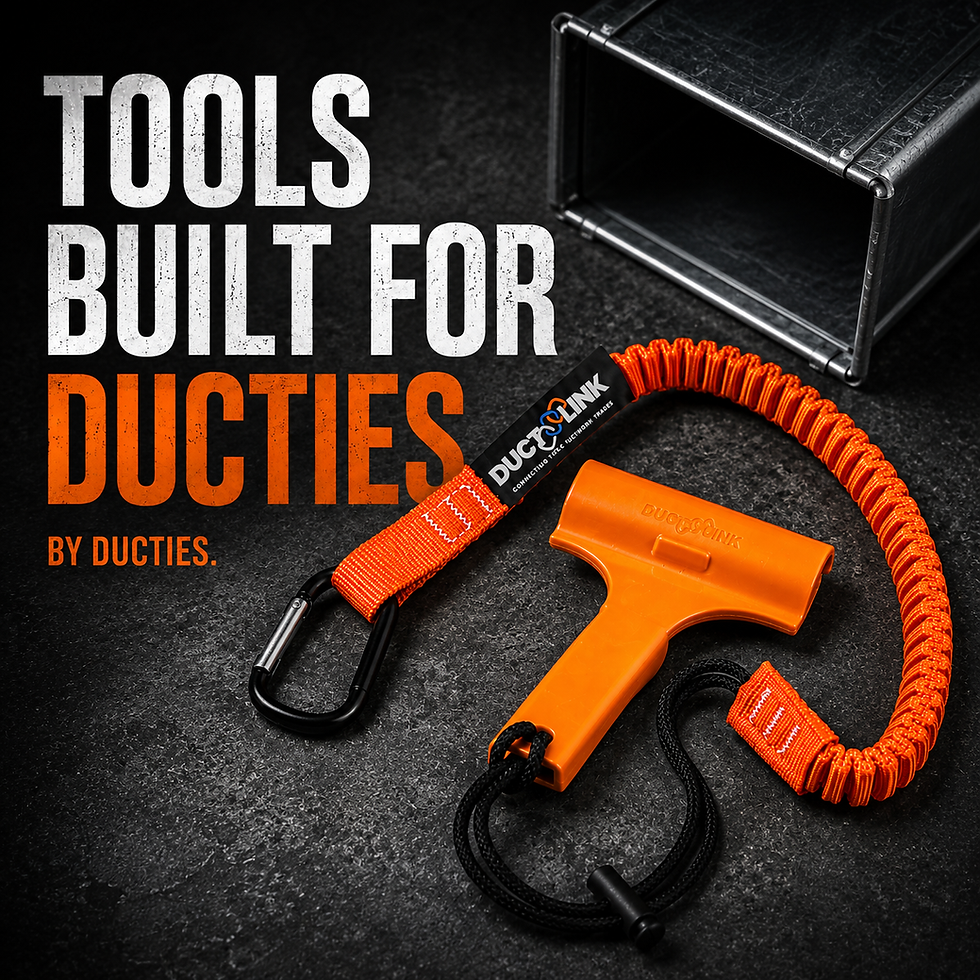
Looking for a cleat tool built for real ductwork installation?
The Ductlink Cleat Tool is designed for the repetitive demands of Australian commercial sites.
The Bottom Line
A cleat tool is one of the simplest ways to improve the speed, consistency and comfort of duct installation.
It helps turn a repetitive manual task into a faster and more controlled process.
For Australian Ducties working across commercial and industrial projects, the right cleat tool is not an optional extra. It is part of a professional install kit.
Ductlink develops tools specifically for the people who install ductwork every day.
Built by Ducties, for Ducties.
Ready to upgrade your kit? Shop the full Ductlink range at ductlink.com.au Keep Reading
Learn more about the tools and systems used by Australian ductwork installers:
Best Tools for Ductwork Installation in Australia
TDF vs Pittsburgh Lock: Which Duct System Is Right for Your Job?
Explore Ductlink’s full range of ductwork tools, storage and site solutions.
Follow us on Instagram @ductlink.au for tool tips, site hacks, and content built for Ducties.


Comments